How to choose a whole house water filter: 7 checks before you buy
Seven checks, in order, from your water test to the warranty: the shortlist that comes out of them, and why.
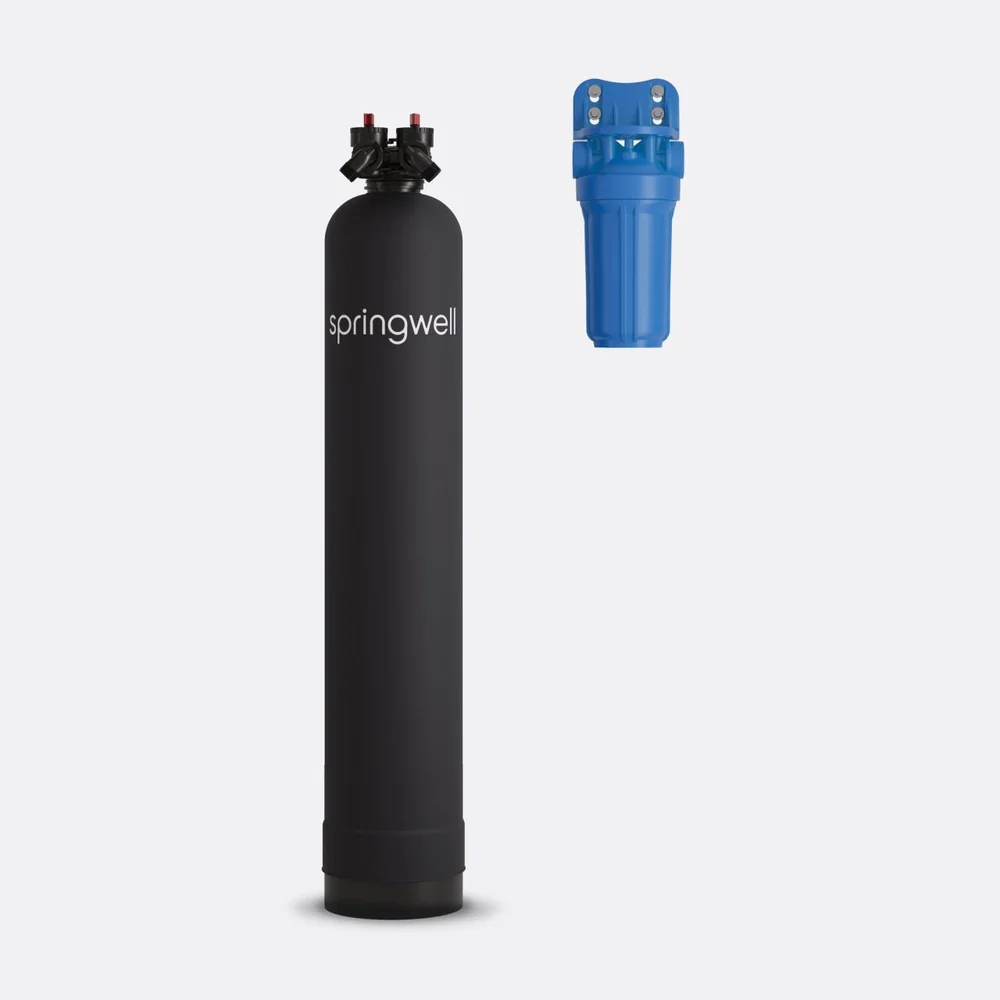
SpringWell CF1 Whole House Water Filter8.9/10Read the review
Choosing a whole house filter is less about brands than about seven checks, done in order: what is in your water, which media handles it, whether the flow keeps up with your house, what the certification really covers, what it costs to keep, what the install needs and what the warranty promises. Get those right and the shortlist writes itself.
1. Know what is in your water
Everything else depends on this. On city water, your utility's Consumer Confidence Report lists the disinfectant (chlorine or chloramine) and often the hardness. On a well, get a state-certified lab test: the CDC recommends testing at least once a year for coliform bacteria, nitrates, total dissolved solids and pH. Add iron, manganese, hardness and hydrogen sulfide if you see stains or smell rotten eggs.
2. Match the media to the problem
| Problem | What handles it | Examples in our data |
|---|---|---|
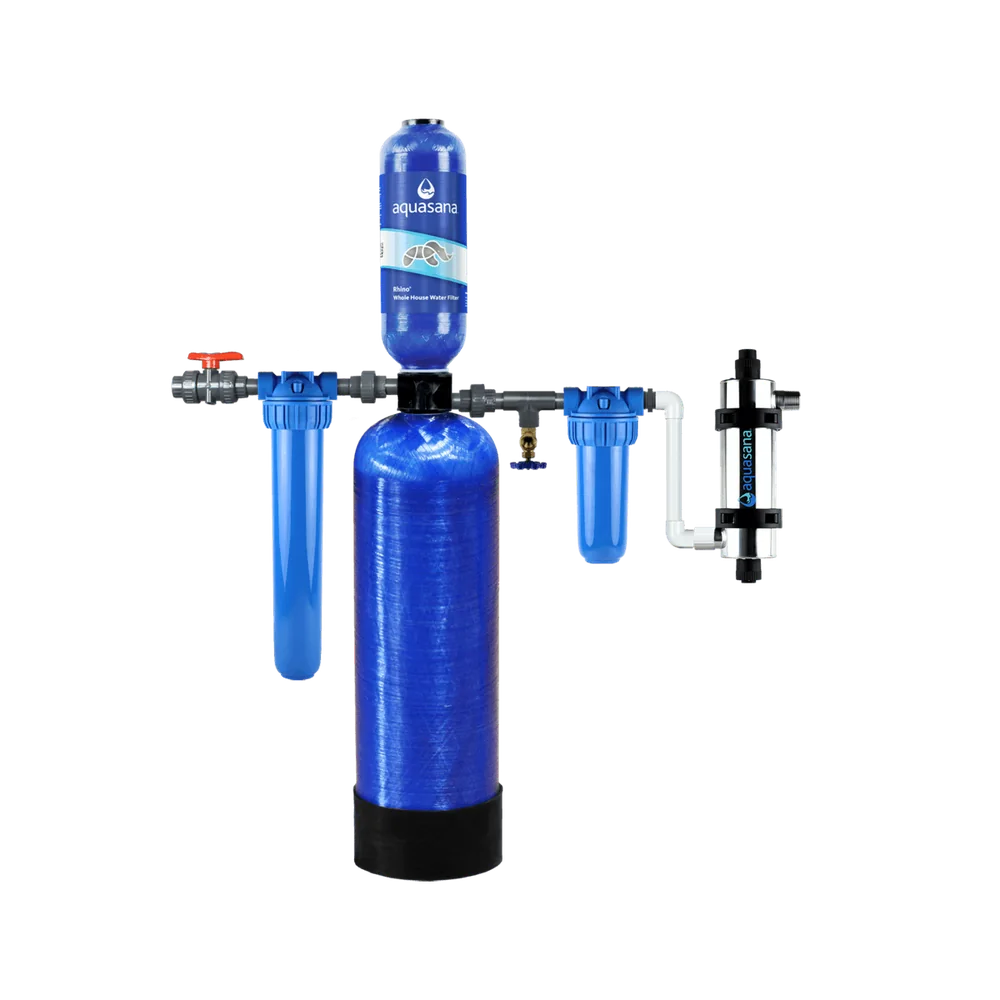
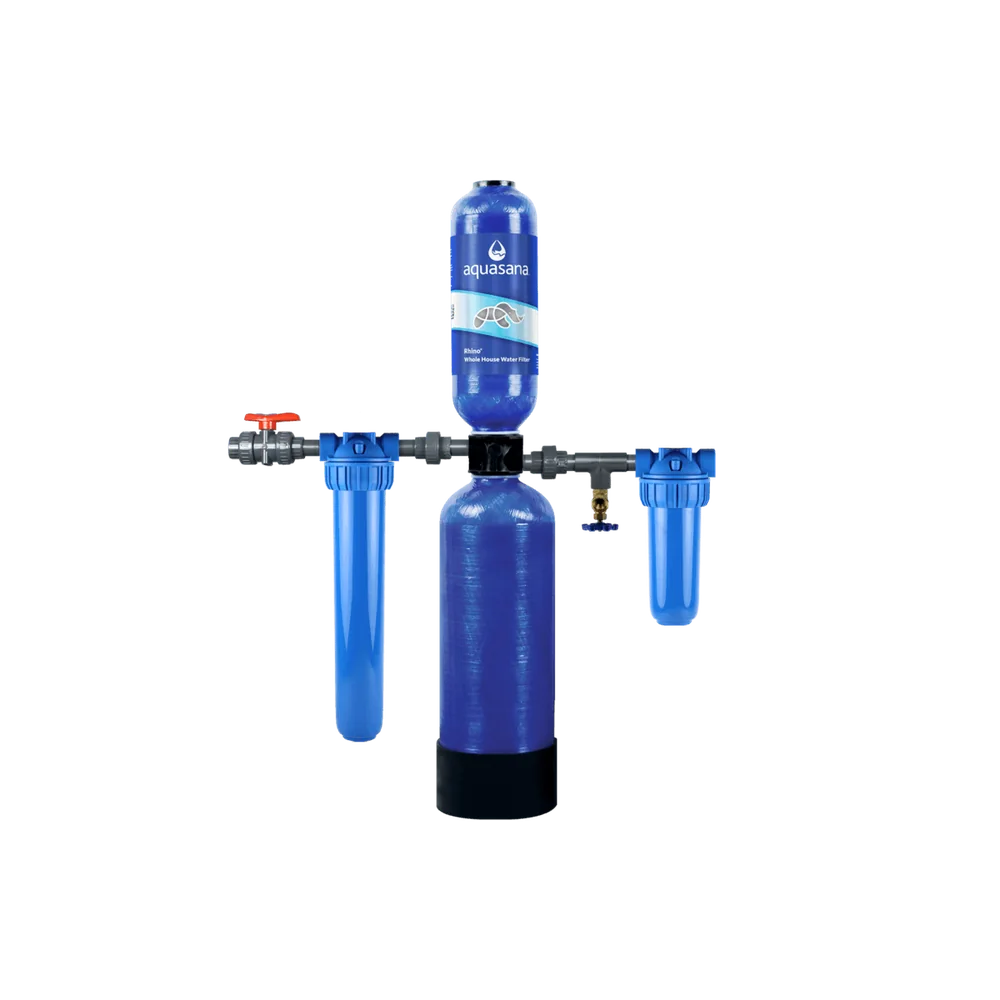
| Chlorine, taste, odor | Activated carbon | Aquasana Rhino, Waterdrop WHF3T-PG |
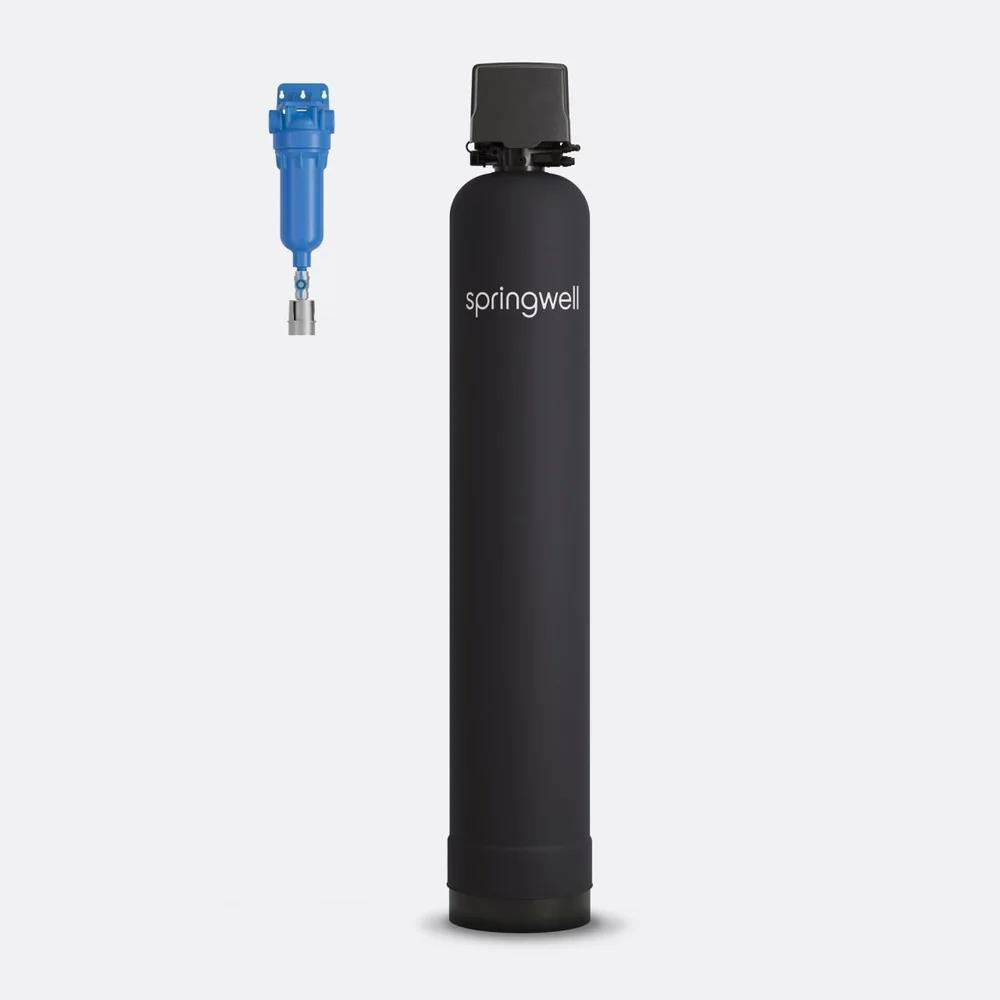
| Chloramine | Carbon rated for chloramine | SpringWell CF1 |
| Sediment | Sediment stage | Most systems here |
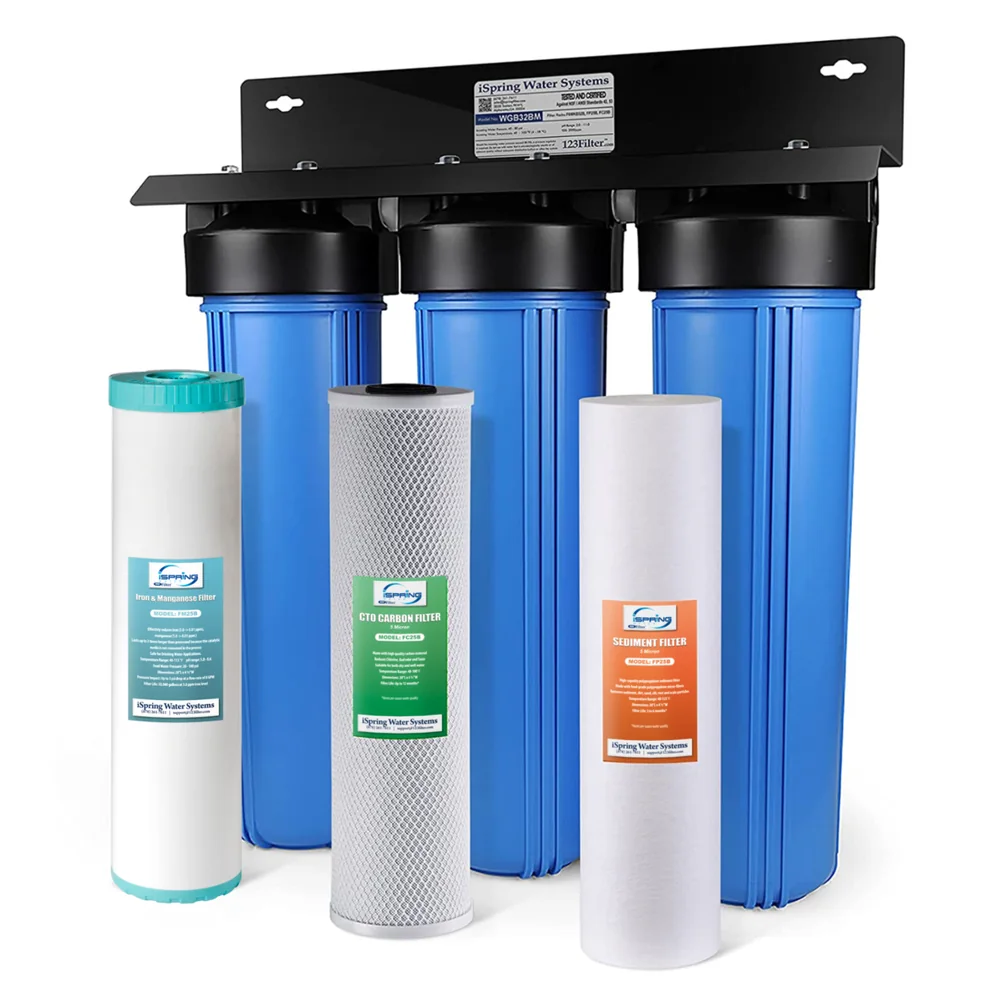
| Iron and manganese up to 3 ppm | Iron cartridge stage | iSpring WGB32BM |
| Iron, manganese, sulfur above that | Backwashing oxidation media | SpringWell WS1, SoftPro Iron Master |
| Bacteria on a well | UV after filtration | Rhino Well Water with UV |
| Hardness | Not a filter: a softener | Water softener ranking |
The mistake to avoid: a city carbon filter on a well with iron. Carbon will not stop iron, and the cartridges clog within weeks. Our iron guide matches each iron level to a treatment.
3. Check the flow against your busiest morning
A filter that cannot keep up drops the pressure when two showers and the dishwasher run together. Look at the gallons per minute, and at how the brand states them. Service flow is what the filter treats properly at a steady rate; peak flow is the most it will pass. SpringWell sizes the CF1 at 9 GPM service for 1 to 3 bathrooms, with 12 and 20 GPM versions for bigger homes. Aquasana rates the Rhino at 14.6 GPM peak and 7 GPM rated flow.
Check the port size too. Most systems here use 1" connections; if your main line is 1" and a filter is 3/4", the narrower port becomes the bottleneck.
4. Read what the certification covers
Certification lines are where marketing gets creative. NSF/ANSI 42 covers aesthetic claims such as chlorine, taste and odor. NSF/ANSI 61 and 372 cover the safety of the materials and their lead content, not what the filter removes. NSF/ANSI 55 Class B, on a UV unit, means supplemental treatment of water that is already safe to drink, not disinfection of contaminated water.
- Aquasana states the Rhino is independently tested to NSF/ANSI 42 for up to 97% chlorine reduction, with tanks certified to NSF/ANSI/CAN 61 for materials.
- Waterdrop cites a third-party lab result of 97.7% initial chlorine reduction for the WHF3T-PG, and NSF/ANSI 372 lead-free materials.
- SpringWell names no certification for the CF1, but guarantees chlorine and chloramine below detection for 6 years or 1 million gallons.
- SoftPro shows NSF, WQA and IAPMO badges without naming the standard or the component.
None of these alone rules a system out. They tell you what to ask, and what to weigh: our methodology gives a named standard or an independent lab test more points than an unnamed badge.
5. Price the upkeep, not just the system
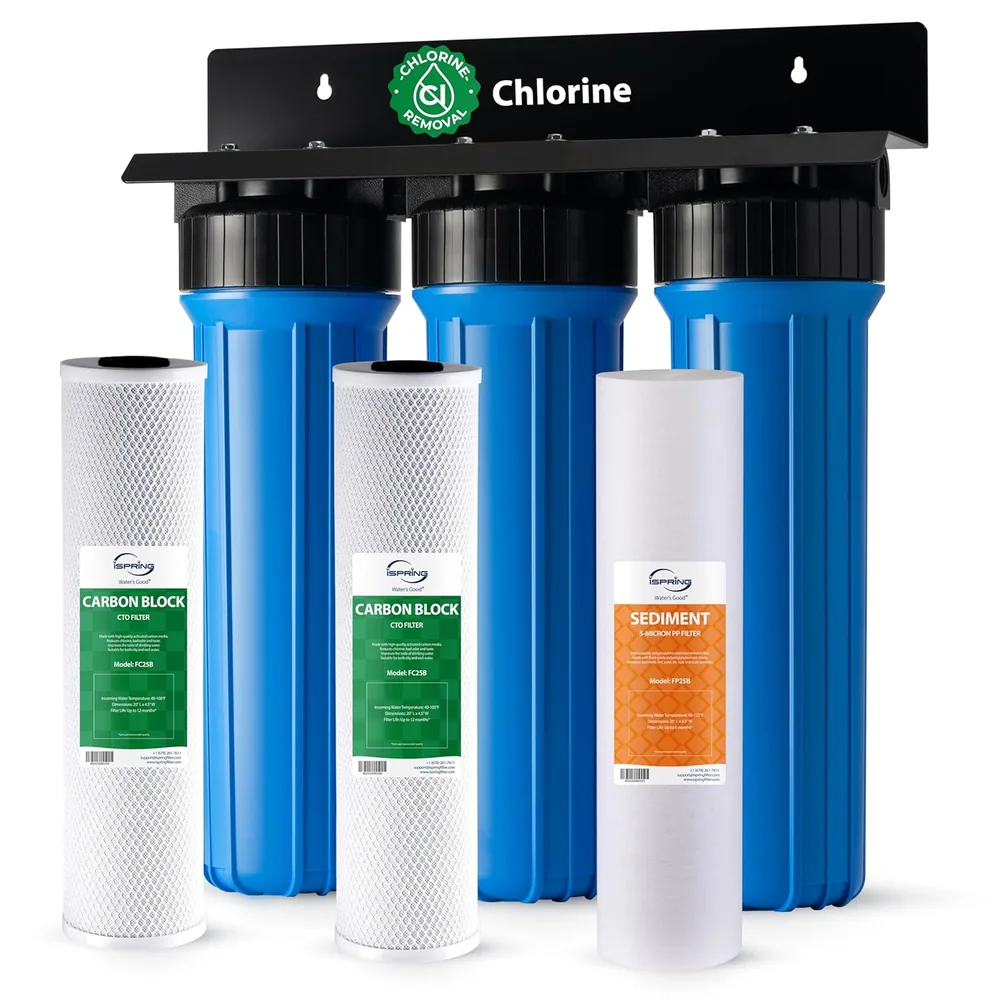
Cartridge systems are cheap to buy and cost more every year; carbon tanks cost more up front and little after. At the brands' shortest stated intervals and list prices on November 9, 2026, yearly filters run $45.57 for the CF1, $119.04 for the Waterdrop WHF3T-PG, $147.96 for the Rhino and $251.98 for the iSpring WGB32B. Backwashing well tanks such as the WS1 and the Iron Master need no cartridges at all. Our cost guide adds it all up over five years.
6. Check what the install needs
- A drain and an outlet: backwashing well filters (the WS1, the Iron Master) and UV units need them; carbon tanks and cartridge housings do not.
- Space: the Rhino tank stands 46" high and 9" wide; the WS1 tank is 10" x 54", 64" with the head.
- A well pump that keeps up: SoftPro asks for at least 5 GPM for the 1.0 cubic foot Iron Master.
- A bypass valve and pressure gauges before and after the filter, so you can see when a cartridge clogs.
- Labor: HomeGuide puts installation at $200 to $600, and $300 to $800 more if a new drain line is needed.
7. Compare the warranty and the return window
| System | Warranty | Return window |
|---|---|---|
| SpringWell CF1 | Lifetime against defects | 6 months |
| SoftPro Iron Master | Lifetime limited | 6 months |
| Aquasana Rhino | 10 years, limited | 90 days |
| SpringWell WS1 | Lifetime on tanks, 5 years on the head | 6 months |
| Waterdrop WHF3T-PG | 1 year | 30 days |
| iSpring WGB32B | 1 year, extended when registered | 30 days |
The return window is the most useful line on this table. Six months is long enough to live with a system through a season and see whether the smell, the stains or the grit have really gone. Thirty days is enough to check the install, not much more.
Putting the seven checks together
On city water with chlorine or chloramine, the SpringWell CF1 passes every check in our data: it names both disinfectants, needs no drain or outlet, costs $45.57 a year to keep and carries a lifetime warranty. On a budget, the Waterdrop WHF3T-PG trades warranty and upkeep for a $369.99 price. On a well with iron, the SoftPro Iron Master leads our well water ranking. The full filter ranking and the comparison tool let you run the same checks on all nine systems.
Sources, read on November 9, 2026: CDC, guidelines for testing well water · EPA secondary drinking water standards, 40 CFR 143.3 · HomeGuide, water filtration system cost (Sept 17, 2025).
Figures from the brands' official pages and US prices checked on November 9, 2026. Images: manufacturers. How we score: see our methodology.
Our selection
Three rated systems mentioned in this guide, at checked prices.
Frequently asked questions
What should I look for in a whole house water filter?
In order: the contaminants on your water report, the media that handles them, flow for your home, what the certification covers, yearly upkeep, install needs and warranty.
What size whole house water filter do I need?
Match the flow to your home: SpringWell sizes the CF1 at 9 GPM for 1 to 3 bathrooms and sells 12 and 20 GPM versions for larger homes. A 1" port suits most 1" main lines.
Which certification matters for a whole house filter?
The one that covers your contaminant, such as NSF/ANSI 42 for chlorine, taste and odor. Materials certificates such as NSF/ANSI 61 or 372 concern the safety of the parts, not removal.
Is a cartridge or a tank system better?
Cartridges cost less up front and more each year; tanks the opposite. Over five years in our data, the Waterdrop cartridge system is the cheapest, and the SpringWell CF1 has the lowest yearly upkeep of the city systems.