Which problem do you have?
| What you notice | Likely cause | What fixes it |
|---|---|---|
| Pool smell in the shower, chemical taste | Chlorine or chloramine (city water) | Carbon filter: see the filter ranking |
| Grit in aerators, cloudy water | Sediment | Sediment filter |
| Orange or brown stains, metallic taste | Iron (mostly wells) | Iron filter |
| Black specks or stains | Manganese | Iron and manganese filter |
| Rotten-egg smell | Hydrogen sulfide | Air injection or oxidation filter |
| White crust on faucets, spotty glasses, scale in the kettle | Hardness (calcium, magnesium) | Softener or salt-free conditioner |
Your water report settles it. City water users get a Consumer Confidence Report from the utility every year, which lists the disinfectant and usually the hardness. Well owners need a lab test; the CDC recommends testing at least once a year for coliform bacteria, nitrates, total dissolved solids and pH, and a hardness and iron panel answers this question too.
What a filter does and does not do
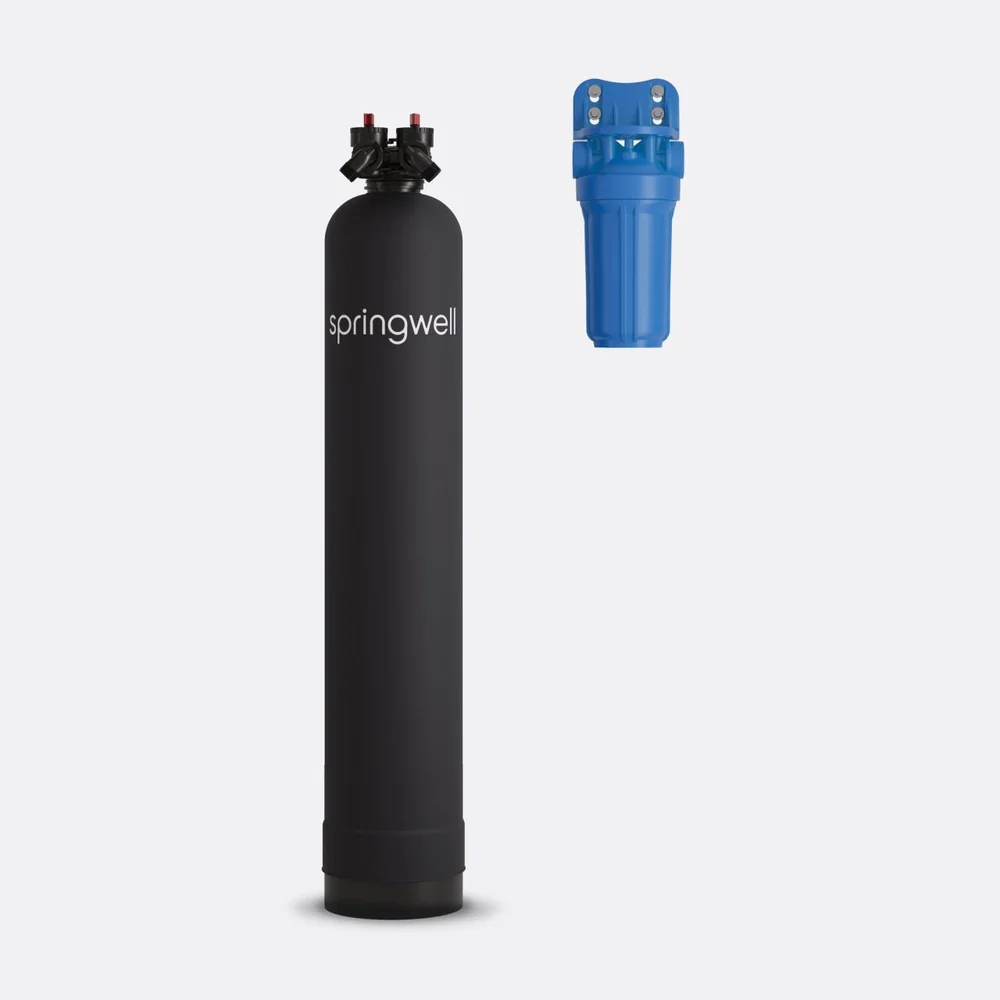
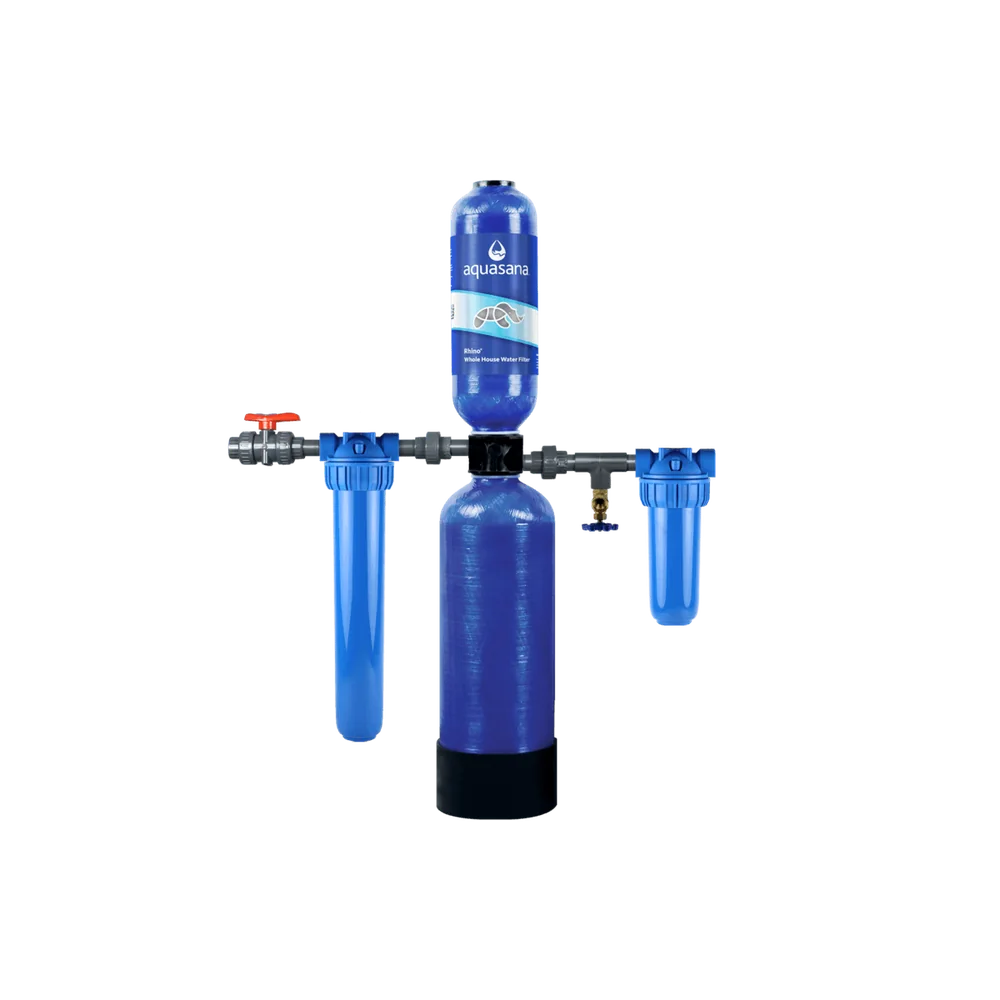
A whole house filter passes water through media that traps or reacts with specific contaminants. Carbon handles chlorine, taste, odor and some organic chemicals; KDF and catalytic carbon are added for chloramine; air injection and greensand-type media take out iron, manganese and sulfur. What none of them does is remove calcium and magnesium. The SpringWell CF1 or the Aquasana Rhino will make the water taste and smell better, and your glasses will still spot.
What a softener does and does not do
A salt-based softener swaps calcium and magnesium for sodium in a resin bed. Soap lathers, scale stops building up, glasses come out clear. It does not take out chlorine, and chlorine is bad for it: SoftPro writes that free chlorine at 2 ppm can shorten resin life. Softeners can remove small amounts of clear-water iron; the Minnesota Department of Health says 2 to 5 mg/L is a common limit, though iron fouls the resin over time.
A salt-free conditioner is a third option. It does not remove hardness either; it changes it so that it sticks less to pipes and heaters. Our salt vs salt-free guide explains the trade-off.
When you need both
Plenty of homes do: chlorinated city water that is also hard, or a well with iron and hardness. The order matters.
- Sediment filter first, to protect everything after it.
- Iron, manganese and sulfur filter next (wells), or carbon for chlorine (city).
- Softener or conditioner after the filter.
- UV last, if you have one, because it needs clear water.
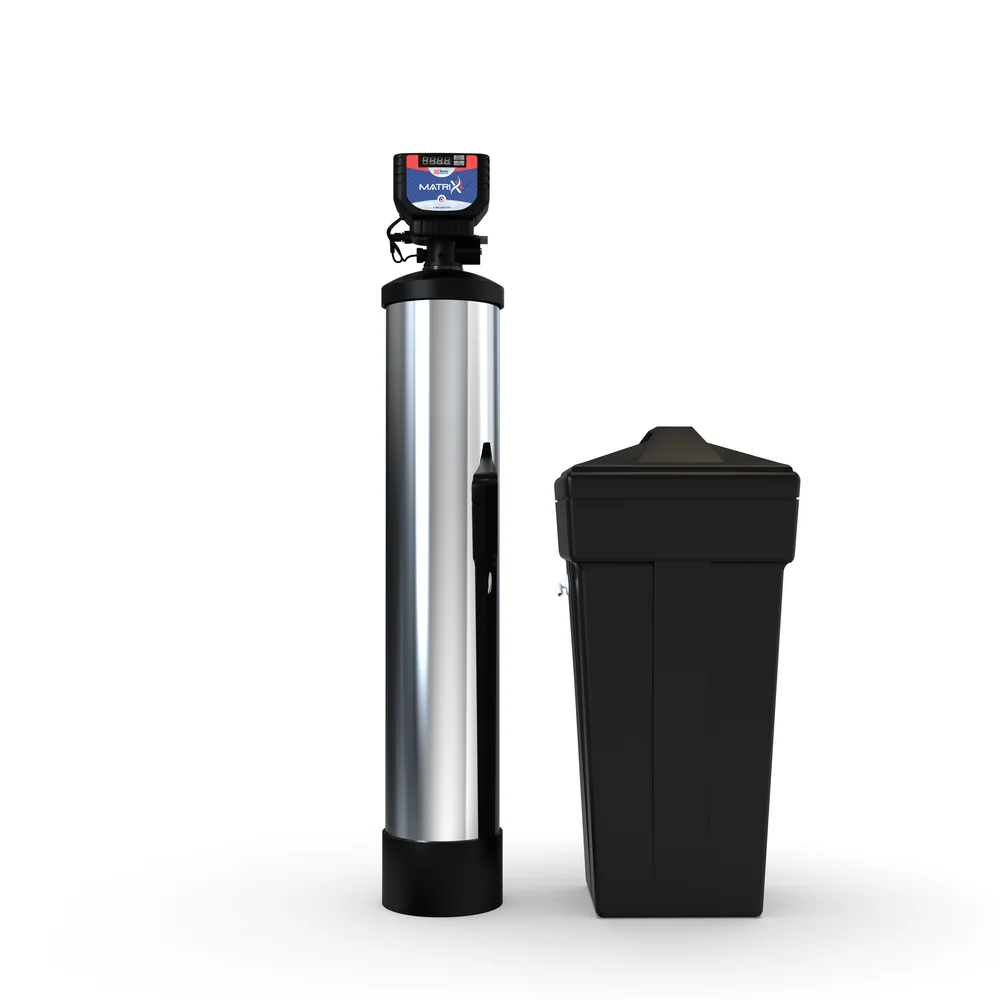
TipSeveral brands sell combos. SpringWell lists filter and softener combo systems on its store. Buying separately lets you mix brands, for example a SpringWell CF1 ahead of a Matrixx softener.
Three homes, three answers
A suburban house on city water, with a chloramine taste and 14 gpg of hardness: it needs both. A carbon filter that names chloramine, such as the SpringWell CF1, then a softener such as the Matrixx. The filter protects the softener resin from the disinfectant, and the softener deals with the crust on the faucets.
A rural house on a well, with 2 ppm of iron, 12 gpg of hardness and orange stains in the toilet: an iron filter first, then a softener. A softener alone might cope with some of the iron, since MDH says 2 to 5 mg/L is a common limit, but the resin fouls over time, and the stains come back when it does.
A city apartment or small house with 4 gpg and a chlorine smell: a filter only. At 4 gpg, the USGS calls the water moderately hard at most, and a softener would add cost for little visible change.
What it costs to have both
With the prices we checked on November 9, 2026, a CF1 and a Matrixx come to $2,831.95 before installation. A budget pairing, the Waterdrop WHF3T-PG and the Fleck 5600SXT, comes to $1,245.99, with a yearly filter set to add. Our cost guide and softener installation guide add labor and running costs.
Systems mentioned in this guide
Frequently asked questions
Do I need a water softener if I have a whole house filter?
Only if your water is hard. A filter does not remove calcium or magnesium. If your water is above about 7 gpg (120 mg/L), the USGS threshold for hard water, and scale bothers you, add a softener after the filter.
Does a water softener filter water?
Not in the sense people usually mean. It removes hardness and small amounts of clear-water iron. It does not remove chlorine, sediment or most other contaminants.
Which comes first, a water filter or a water softener?
The filter. Sediment, chlorine and iron would otherwise reach the softener resin and shorten its life.
Can one system do both?
Combo systems put a filter and a softener on one install, but they are still two treatment stages. No single media in our data both softens and removes chlorine.
Sources
USGS, hardness of water · CDC, guidelines for testing well water · Minnesota Department of Health, iron in well water · SoftPro, how long water softener resin lasts (brand page). Read on November 9, 2026.