Step one: test the water
The CDC recommends testing a private well at least once a year for total coliform bacteria, nitrates, total dissolved solids and pH, using a state-certified lab. For iron, add iron, manganese, hardness, alkalinity and iron bacteria, as the Minnesota Department of Health suggests. Ask for hydrogen sulfide too if you smell rotten eggs.
| What the test shows | Reference level | Source |
|---|---|---|
| Iron | 0.3 mg/L | EPA secondary standard |
| Manganese | 0.05 mg/L | EPA secondary standard |
| pH | 6.5 to 8.5 | EPA secondary standard |
| Hydrogen sulfide | Most people smell it well below 0.5 mg/L | Penn State Extension |
| Hardness | Hard above 120 mg/L (7 gpg) | USGS |
These secondary standards are about stains, taste and odor, not health. A well can be within them and still have bacteria or nitrates, which is why the yearly test matters.
Step two: know which iron you have
- Clear-water (ferrous) iron comes out of the tap clear and turns red or brown after standing.
- Red-water (ferric) iron is already red or yellow at the tap.
- Organic iron looks yellow or brown, sometimes colorless, and is more likely in shallow wells. It resists oxidation, so standard iron filters may struggle.
- Iron bacteria leave a red or brown slime in the toilet tank. MDH says they are not harmful but make an iron problem much worse, and it publishes a separate page on treating them.
Step three: match the treatment to the level
| Iron level | Treatment that fits | Examples in our data |
|---|---|---|
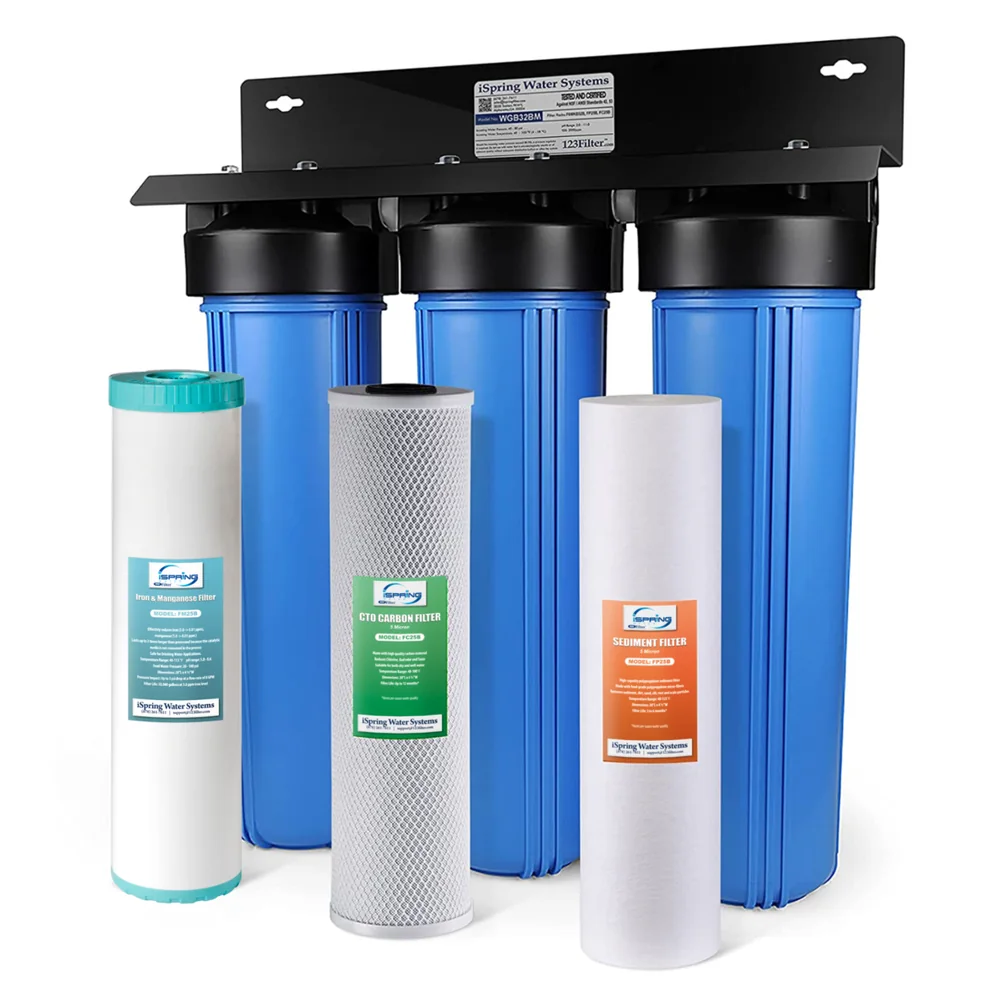
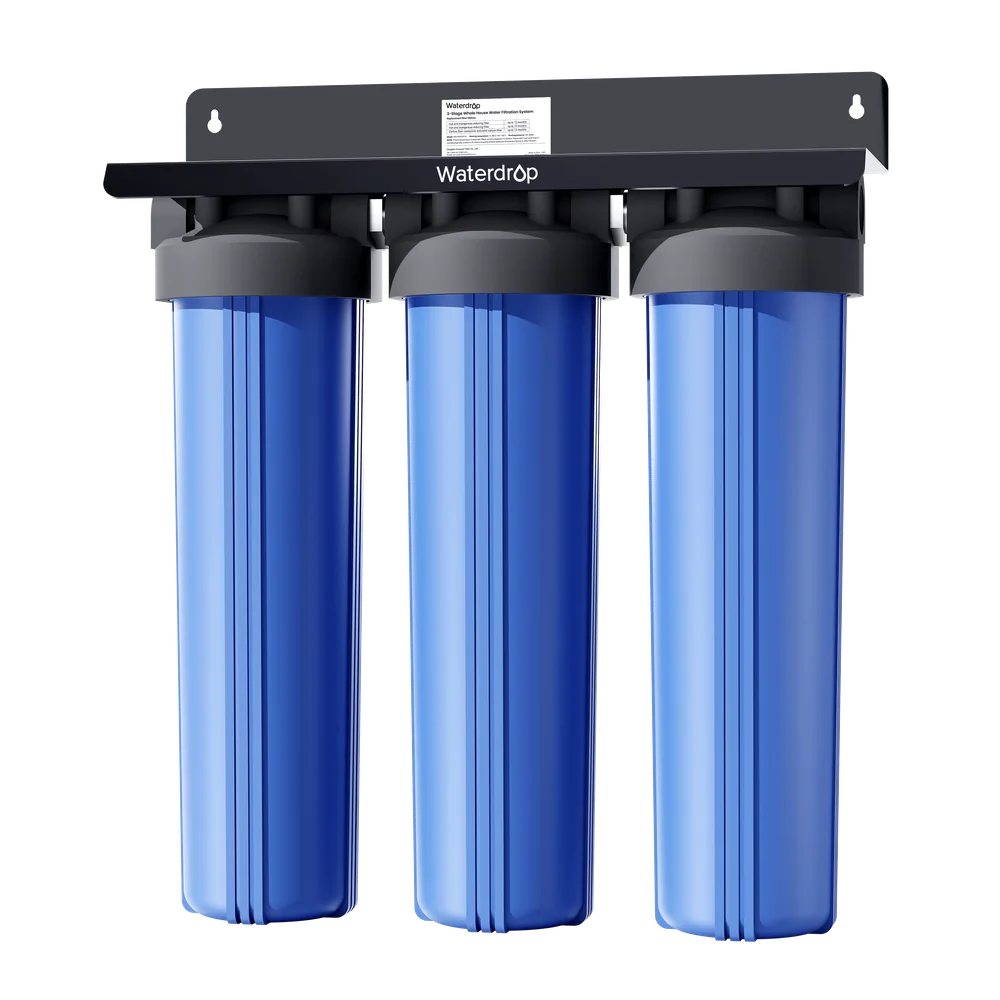
| Under about 3 ppm | Cartridge system with an iron stage (no drain, no power) | iSpring WGB32BM (3 ppm stated), Waterdrop WHF3T-FG (no limit stated) |
| 2 to 5 ppm clear-water iron with hardness | A softener can remove some, per MDH, but iron fouls the resin | Better: an iron filter ahead of the softener |
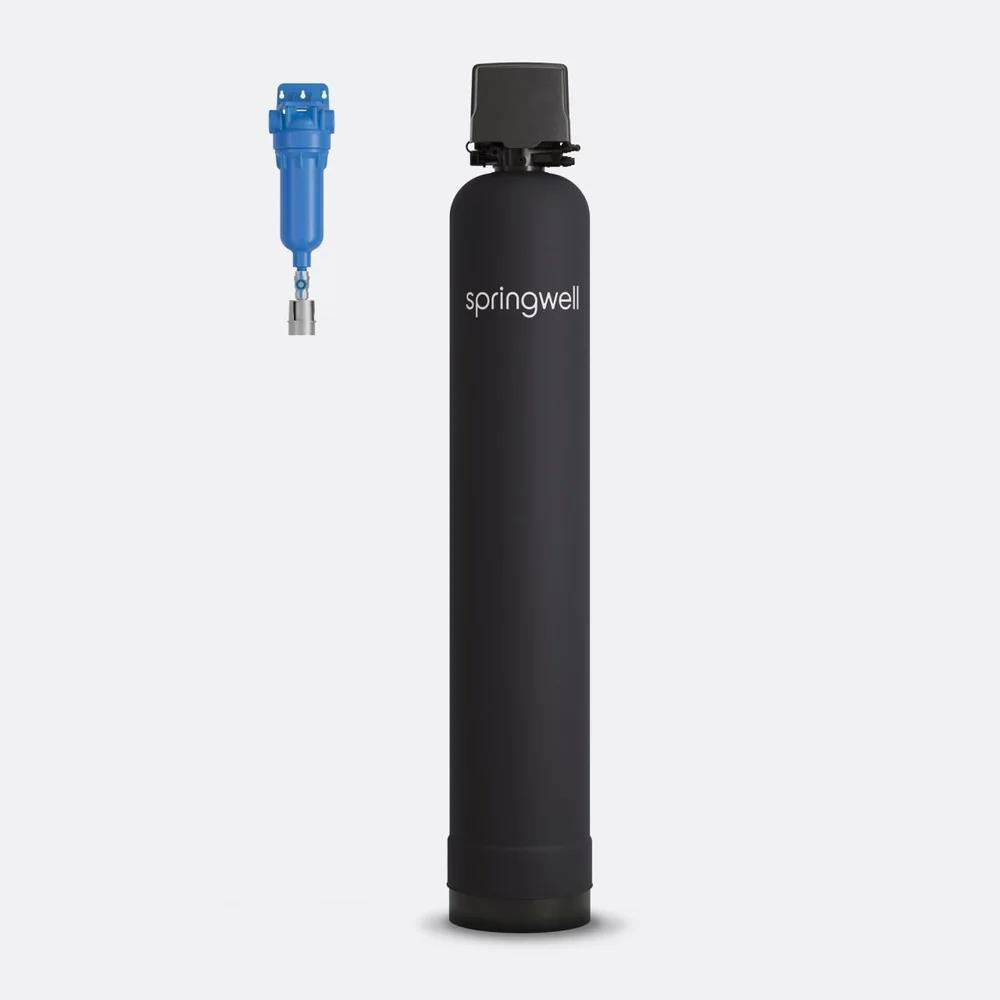
| Up to about 7 ppm, with sulfur | Air injection with greensand-type media | SpringWell WS1 (7 ppm iron, 8 ppm H2S) |
| Up to 30 ppm | Air injection with catalytic media, nightly backwash | SoftPro Iron Master (30 ppm iron, 7 ppm manganese) |
| Above 10 ppm or organic iron | Chemical oxidation (chlorine or peroxide) and filtration, per MDH | Work with a licensed water treatment pro |
Cartridges are the cheapest start and the most expensive habit. The iSpring iron cartridge is rated for 50,000 gallons at 3 ppm, about five and a half months for a family using 300 gallons a day. A backwashing tank costs more on day one and nothing a year in filters, but needs a drain, an outlet and enough pump flow: SoftPro asks for at least 5 GPM for the 1.0 cubic foot Iron Master.
The rotten-egg smell
Hydrogen sulfide is a gas dissolved in the water. Penn State Extension notes that most people smell it well below 0.5 mg/L, that it corrodes metals and can leave yellow or black stains. Its treatment depends on the level: activated carbon may work below about 1 mg/L, aeration strips the gas, and continuous chlorination is used most often above 6 mg/L.
TipSmell only in the hot water? Penn State Extension points to the water heater: its magnesium anode rod can turn sulfates into hydrogen sulfide. A plumber can swap the anode before you buy a filter.
Step four: put it in the right order
- Pressure tank.
- Sediment pre-filter.
- Iron, manganese and sulfur filter.
- Softener, if the test shows hardness.
- UV, if you want disinfection, last because it needs clear water.
CarefulIf your test shows coliform bacteria or E. coli, call your local health department before buying anything. A UV unit certified to NSF/ANSI 55 Class B, like the one in the Aquasana Rhino Well Water kit, is meant for water that is already safe to drink.
Systems mentioned in this guide
Frequently asked questions
What is the best way to remove iron from well water?
It depends on the level. Under about 3 ppm, a cartridge system with an iron stage works. Above that, an air injection filter that backwashes itself, such as the SpringWell WS1 (7 ppm) or the SoftPro Iron Master (30 ppm), is the usual answer.
Will a water softener remove iron?
Some clear-water iron, yes. The Minnesota Department of Health says 2 to 5 mg/L is a common limit, and iron fouls the resin over time. A dedicated iron filter ahead of the softener is more reliable.
How do I get rid of the sulfur smell in my well water?
Test for hydrogen sulfide first. Below about 1 mg/L, activated carbon may work; aeration and air injection systems handle more, and chlorination is used most often above 6 mg/L, per Penn State Extension. If the smell is only in the hot water, check the water heater anode.
Is iron in well water dangerous?
Usually not to health, according to the Minnesota Department of Health. The EPA limit of 0.3 mg/L is a secondary standard for stains and taste. Iron bacteria are not harmful either, but they make the iron problem worse.
Sources
EPA secondary drinking water standards, 40 CFR 143.3 · CDC, guidelines for testing well water · Minnesota Department of Health, iron in well water · Penn State Extension, hydrogen sulfide in water wells · USGS, hardness of water. Read on November 9, 2026.