Side by side
| Salt-based softener | Salt-free conditioner | |
|---|---|---|
| What it does | Removes calcium and magnesium | Changes them so they stick less |
| Spots on glass, soap lather | Fixed | Little change |
| Scale in pipes and heaters | Stops | Reduced, per brand claims |
| Salt | 40 lb bags, refilled | None |
| Drain line and outlet | Both needed | Neither |
| Sodium added | Yes, in proportion to hardness removed | No |
| Iron in the water | Small amounts tolerated | Usually not: the FutureSoft is rated for 0 ppm |
| Price in our data (1-3 baths) | $876 to $1,890 | $529 to $2,100 |
How salt-based softening works
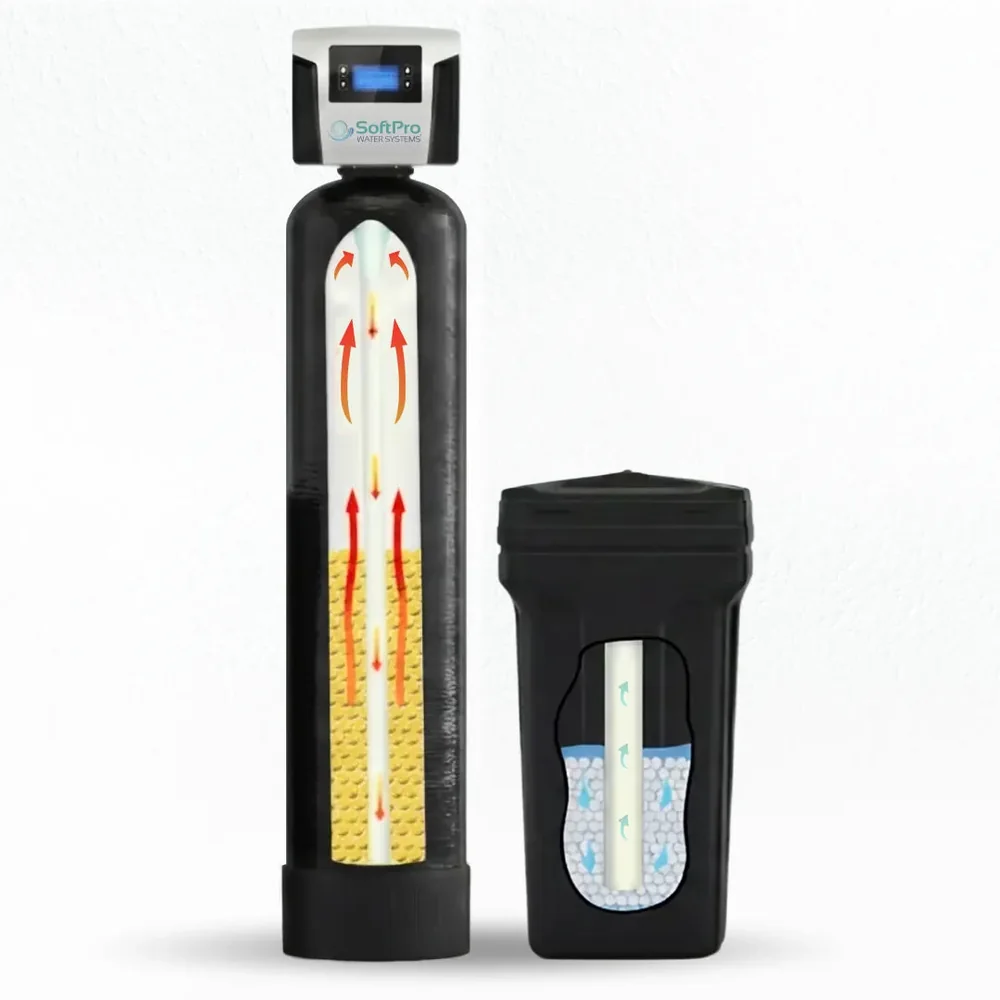
Water runs through a tank of resin beads that hold sodium. Calcium and magnesium stick to the beads and sodium goes into the water. When the beads are full, the valve rinses them with brine from the salt tank and flushes the hardness down the drain. That is the regeneration, usually at night, and it is why you need a drain and why you buy salt.
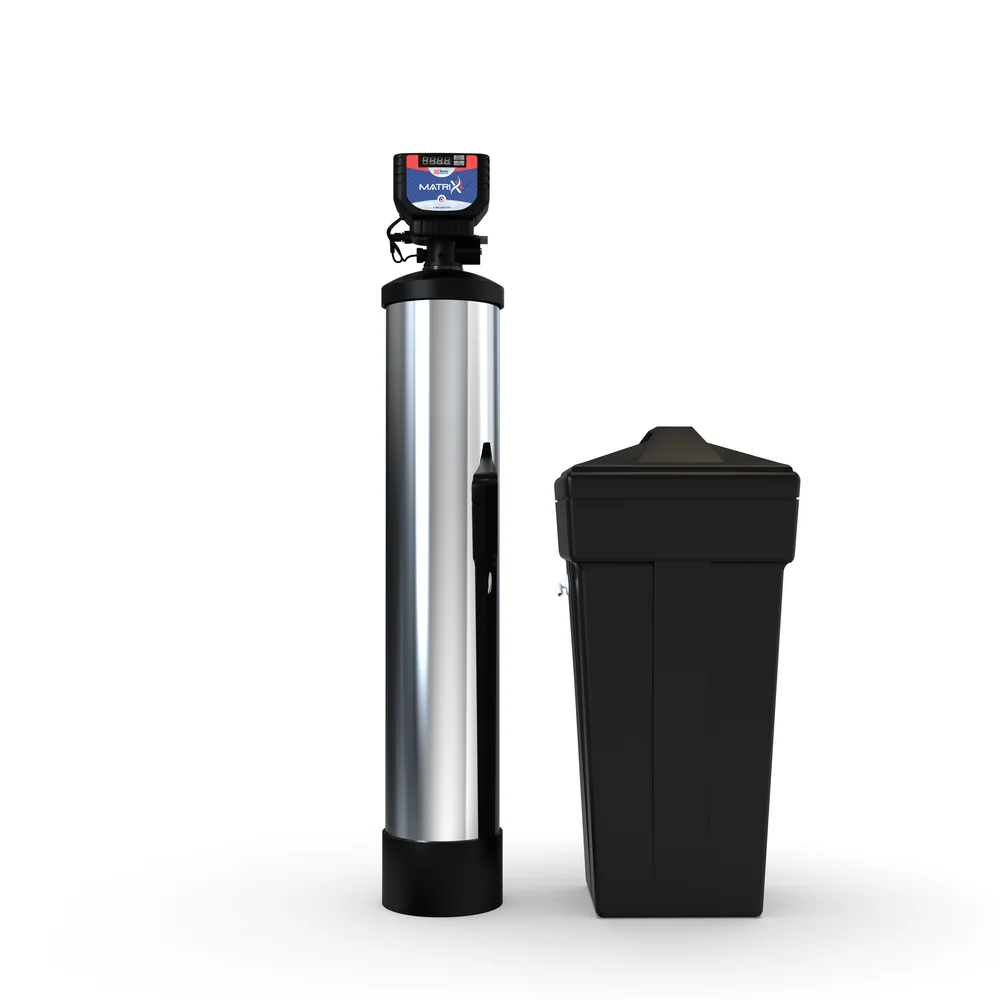
Modern valves have cut the salt bill. US Water Systems states 3 lb of salt per regeneration for the Matrixx on its efficient setting; SoftPro claims up to 30% salt savings for the Elite with upflow regeneration.
How salt-free conditioning works
Template-assisted crystallization (TAC) media, used by SpringWell and SoftPro, turns dissolved calcium into microscopic crystals that float through the plumbing rather than sticking to it. Aquasana uses its own Scale Control Media. Nothing is removed, nothing is flushed, and there is nothing to refill. The media does wear out: SoftPro says about 5 years for the Fortress Pro, Aquasana 10 years for its conditioner.
CarefulThe scale claims come from the brands. SpringWell names no certification for the FutureSoft's 95%, SoftPro's Fortress certification (NSF/ANSI/CAN 61) covers materials, not scale. Aquasana says its conditioner is independently tested to reduce scale buildup, without naming the standard.
Which one fits your house
- Choose salt-based if spots, soap scum and dry skin after the shower are what bother you, or your hardness is high and you want it gone.
- Choose salt-free if you mainly want to protect a tankless heater or new plumbing, you have no drain or outlet near the main line, you live where salt softeners are restricted, or you will not carry salt.
- Neither, yet, if you have iron, manganese or sulfur: treat that first with a well filter.
One more test that helps: check your hardness against the USGS classes. Under 60 mg/L (3.5 gpg) is soft and probably needs nothing. Above 180 mg/L (10.5 gpg), a conditioner will protect the heater, but you will still see the hardness everywhere else.
Running costs side by side
| Cost | Salt-based | Salt-free |
|---|---|---|
| Salt | $5 to $10 per 40 lb bag (Angi); a few bags a year on an efficient setting | None |
| Water for regeneration | Yes: 33 gallons per regeneration on the Matrixx StackFlow setting, per US Water Systems | None |
| Power | A metered valve on an outlet | None |
| Media | Resin, typically 10 to 15 years (SoftPro) | About 5 years (Fortress Pro), 10 years (Aquasana) |
| Install extras | Drain line ($300 to $800 if new, HomeGuide) and outlet | Usually none |
Neither is expensive to run. The salt-based softener costs a little every month; the conditioner costs nothing until the media is due. Over ten years the totals are close enough that the choice should come from what you want the water to do, not from the bill.
Sodium, plants and the rest of the house
Ion exchange adds sodium to the water in proportion to the hardness it removes, so very hard water softened gets noticeably more sodium than moderately hard water. People on a low-sodium diet often keep one unsoftened tap for drinking or use potassium chloride instead of salt, at $50 to $70 a bag per Angi. Ask your doctor if it matters to you. Most homes also leave the outdoor spigots on unsoftened water, which keeps softened water off the lawn and saves salt.
Systems mentioned in this guide
Frequently asked questions
Is a salt-free water softener as good as a salt-based one?
Not if you want soft water. A salt-free conditioner reduces scale but leaves the hardness in, so spots and soap use barely change. For pipe and heater protection without salt, it can be a reasonable choice.
What is the difference between a water softener and a water conditioner?
A softener removes calcium and magnesium; a conditioner keeps them in the water and changes their form so they cause less scale. Brands often call conditioners "salt-free softeners."
Do salt-free water softeners work on hard water?
They are rated for it: SpringWell and SoftPro both state up to 75 gpg. They reduce scale buildup per the brands, but they do not make the water soft.
Are salt-based water softeners banned anywhere?
Yes, in some places. Automatic self-regenerating salt-based softeners are prohibited throughout the Santa Clarita Valley, per the Los Angeles County Sanitation Districts. Check your city or sanitation district.
Sources
USGS, hardness of water · Los Angeles County Sanitation Districts, softener prohibition in the Santa Clarita Valley · Angi, water softener installation cost (updated Oct 29, 2026) · HomeGuide, water filtration system cost (Sept 17, 2025) · SoftPro, how long water softener resin lasts (brand page). Read on November 9, 2026.